
Service Design Research: Lumen NaaS/Networking as a Service
- Apr 14, 2025
- 17 min read
Updated: Sep 17, 2025
An unglamorous but important 3-part investigation on how roadblocks in the employee experience impacts customer experience outcomes
Long Story Short
Enterprise customers were experiencing issues with having Lumen field technicians miss their appointments for network service installation, so much, that they began to expect this inconvenience as a part of their experience.
There was an initial misconception that customers were having issues with setting their appointments in the digital experience portal —Not entirely true. Upon investigation however, it was discovered that the larger issue stemmed from coordination obstacles field technicians encountered, which affected the customer experience and their perception of Lumen’s brand downstream.

Research Hypothesis
If we internally examine the workflow and experiences of Lumen field technicians as much as we conduct research with external customers- both with persons placing the order and the building managers- we will have a wholistic view of the appointment setting and installation process and will effectively identify and address pain points that occur in-process and down stream.
Top Level Findings
It was discovered that field technicians were not meeting installation dates because:
The contact that makes an installation appointment (i.e.- a receptionist or office admin) isn’t always the contact that gives a Lumen field technician access to the equipment room (i.e.- a facilities engineer, who might be at another location altogether).
A physical location might have different buildings with different building managers.
Customers are responsible for some degree of preparation at their site before a Field Technician’s arrival- especially with more complicated technical orders. However the nuances of preparing a site wasn’t being communicated to the customer.
It is not uncommon for customers to accidentally provide headquarter office locations and not the required local contact site information for first-time installation work.
Field Technicians report that Sales does not fully vet what the customer needs are during the TDG (technical data gathering) process and does not adequately help customers understand what they need.
Field Technicians say they are not receiving “clean orders”. This results in not bringing the correct equipment for the installation.
Research Strategy
Identify all parties involved from placing an order to fulfilling an installation, and identify the best method of communicating coordination -specifically with the facilities contact.
Research the unique challenges faced by building management regarding service provider’s installation processes and preparation required.
Research the experiences and pain points of field technicians conducting installations.
Measurable Wins From Implementing Research-Based Recommendations Over One Quarter:
On-time delivery 58%
CSAT and OSAT Customer satisfaction rating increased by 45%
Employee NPS Employee satisfaction rating increased 48%
Errors reduced 80%
Other Top Level Things To Know
Client | Lumen Technologies |
|---|---|
My Role | Sr. UX Researcher, I initiated this project and worked with a team of two fellow Sr. UX Researchers |
Key Stakeholders | Sr. Director, Enterprise UX, Sr. Director of Network Order Fulfillment, Sr. Director of Field Operations and delivered insights to VP of Network Operations |
Duration | 5 sprints |
Deliverables | Research report and presentation |
Location(s) | Austin Texas, Portland Oregon, Louisville Kentucky |
Research Methods | Qualitative- Unmoderated interviews, field observation and interviews, customer task analysis, heuristic evaluations, nomenclature study, CSAT survey, OSAT survey, Employee NPS survey, secondary research |
Process Framework | Castle and Double Diamond |
Study Participant Profile | Real Estate-Hired (R.E.) Building Managers, Network Administrators, Facilities Generalists, Lumen Field Technicians |
Tools and Resources | Pen, paper, recorder, UserTesting, ContentSquare, Voice of Customer transcripts |
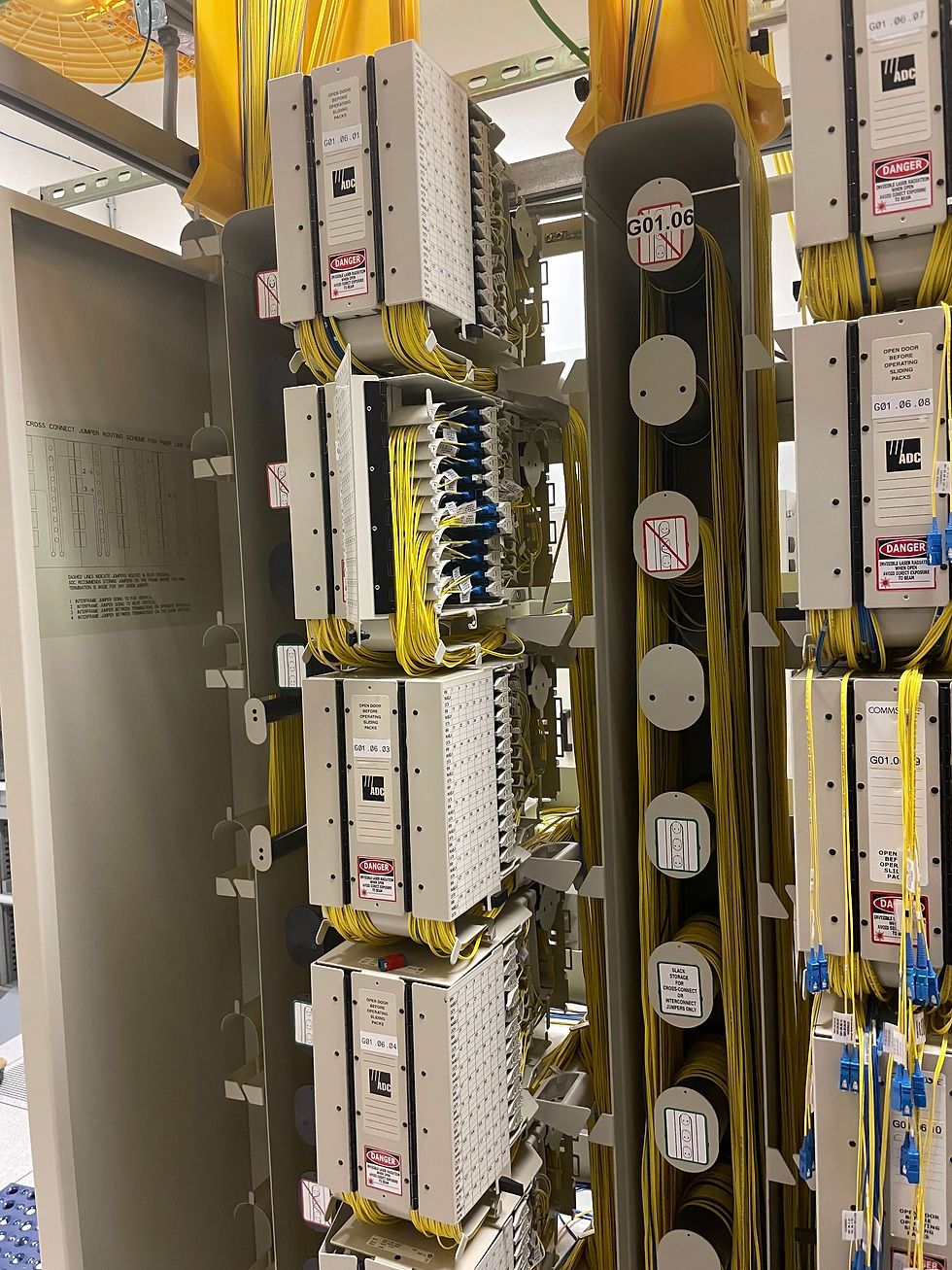
Part 1 Challenge & Goals (Identify all parties involved in placing an order to fulfilling an installation, and identify the best method of communicating coordination)
Find out the appropriate level and type of engagement for communications with customers- specifically facilities contact in comparison to the person managing the order.
Find out how we can improve our communications with facilities management to gain access and power needed to support equipment.
Lastly, find out what gives customers confidence in their order status– logging into a digital experience or engaging with a customer care manager- and the specific nuances to technical equipment orders to consider.
Here’s How I Went About The Process
Qualitative Research Methods
Unmoderated interviews conducted with ten network administrators and five on-site contact facilities generalists over two weeks. Participants were recruited via UserTesting platform, and results were collated using cluster and thematic analysis.
Customer task analysis
CSAT (customer satisfaction) and OSAT (overall satisfaction) surveys
Heuristic Evaluation conducted on the Lumen enterprise customer portal.
Nomenclature study of terminology presented in the ordering of technical equipment in the portal’s flow.
Secondary Research Analysis of Voice of Customer (VOC) transcript feedback provided by call center/customer service representative engagement.
Defining
The issues uncovered in this segment of research pertains to barriers within the customers’ experiences of engaging in the portal (specifically for non-technical customers setting appointments for nuanced, technical equipment orders with multiple building offices and locations).

Key Findings
Stakeholders were initially concerned that the design of the portal asked the customer for too many details and thus causing cognitive load. However, we found that most study participants found it sensible to be asked if they have multiple service IDs (as in, having a service location ID assigned to their organization’s location when ordering a port installation with a network service provider).
Most participants mentioned that it is helpful to have more identifiers for service location to reduce confusion:
“If your organization has multiple locations with multiple buildings at each location, you cannot order everything to the same address.”
Findings Pertaining to Service Location IDs-
Participants understood that service location IDs are useful for large organizations with multiple physical locations.
The common use case for multiple customer numbers was within large organizations with different departments and requirements of the same vendor.
Most study participants reported that either they are ‘likely or very likely’ to have more than one primary customer number or have multiple billing accounts for each of their service providers.
Findings Pertaining to Building Access and Security-
Participants also noted the importance of specificity in details pertaining to building access and security factors (doors, gates, keypad codes, time in/out], as well as IT closet information when assessing a site for installation (dimensions, electrical outlets, ports available/needed).
Preparation work done at sites before installation include a review of the installation plan and estimated timeline documentation (including what sort of wiring, IP addressing, switches, circuit details, type of hardware equipment needed, existing equipment, a review of any previous updates or installations), insurance, site plans and diagrams (to see where they can run the wiring for the internet, whether it’s through the ground or above- being careful not to cut through or interfere with structural components).
Who communicates mostly with the service provider’s field technicians to coordinate port installations?
Participants mentioned that besides the network administrator, the IT director mostly communicates with the service provider’s field technician to coordinate installations along with their procurement, facilities management personnel, their network administration and engineering teammates and project managers.
Findings Pertaining to Best Method of Communication When Coordinating Appointment Details-
The most common method of communication used to communicate with service provider’s field technicians is mostly a combination of phone, text and then email, tied equally with phone exclusively.
The most preferred method of communication used to communicate with service provider’s field technicians is to interact with a customer care manager than log into a digital experience to coordinate an installation.
Findings Pertaining to Customers’ Preferred Method of Engagement With Portal Progress Tracker Versus a Custom Care Manager to Track Installation Appointment Details-
Participants mentioned that the pros and cons to logging into a digital experience and seeing a progress tracker in comparison to engaging with a customer care manager are:
Pros with a progress tracker:
Seeing a progress tracker is quicker than scheduling a phone call.
It is helpful to be able to monitor the progress of your installation.
Cons with a progress tracker:
No direct insights, reasons, feedback, or finer details are given if there is a problem (for example, if a technician’s arrival is delayed).
Too many things to worry about if the progress tracker is for installation, and another is for something else (say, monitoring installed services)
The information may not be updated in real time with a digital experience progress tracker.
Pros with a customer care manager:
A customer care manager might provide more accurate and detailed information -especially for specific questions.
Cons with a customer care manager:
A customer care manager might not be readily available; it is unhelpful if a customer reaches their voicemail, never calls customers back, or recalls boilerplate language in response to specific questions.
Participants report speaking to customer care managers are mainly to:
Verify their equipment is compatible with their service provider’s port solutions.
Assume the service provider will do its best to verify compatibility.
Conduct secondary research beforehand of an installation and then confirm with their customer care manager or-
Verify on their own that their equipment is compatible with the service provider based on past performance (for example, a customer’s fiber and ethernet switches are generally compatible with their service provider’s fiber and ethernet solutions).
Some common issues participants reported when integrating their existing infrastructure needs with a service provider’s port installation process include but are not limited to:
Making sure the correct port type is being installed for the correct location.
Making corrections, such as connecting mismatched items (wrong circuit type installed,
wrong speed, wrong location)
Communication gap between field technician and the IT manager
The results were evenly split between participants when asked their preferences between
engaging with a drop-down menu versus a checkbox when adding on additional networking
services.
Half of the participants mentioned that a drop-down menu makes the most sense to them because they can see the whole list.
The other half of participants mentioned that a checkbox makes the most sense because they can choose one or more options.

Recommendations
The following recommended actions were taken to improve our customers’ problems:
In the digital experience order section
Included fields designating the proper contacts: the primary and secondary on-site building contact/facilities manager, the primary/secondary/tertiary IT point of contact (IT Director, Network Administrator).
Title, name, phone, email for each contact
Building address> gate keypad code> building/door keypad> floor> suite/room/closet
Encourage customers, but do not make it mandatory, because they may not know all contacts.
If customers do not provide aforementioned information, let them know how it might impact installation.
Provided text fields for logging communications between field technicians and IT managers, such as phone calls, text, and email (in that order). We conducted user tests and found that this improved the coordination and collaboration of the teams and reduced miscommunication.
Informed customers about the difference between customer numbers/IDs, service location numbers, and billing account numbers by providing ‘I’ icons in the portal. We found that these changes positively resonated with customers in follow-up user tests.
Within business operations
The Sr. Director of Network Order Fulfillment implemented a quality assurance process for verifying the correct installation of circuit types, speeds, and locations before dispatching field technicians, which reduced the number of corrections made and reduced appointment confirmation time from days to mere minutes (300%).
Part 2 Challenge & Goals (Research the unique challenges faced by building management regarding service provider’s installation processes and preparation required)
Find out the appropriate level and type of engagement for communications with customers- specifically, the real estate-hired (R.E.) building managers.
Find out how we can improve our communications with them to gain access and power needed to support equipment.
Lastly, find out what gives real estate-hired building managers confidence in their order status– logging into a digital experience or engaging with a customer care manager- and the specific nuances to technical equipment orders to consider.
Here’s How I Went About The Process
Qualitative Research Methods
Unmoderated interviews conducted with ten network administrators and five R.E. building managers over two weeks. Participants were recruited via UserTesting platform, and results were collated using cluster and thematic analysis.
Customer task analysis
CSAT (customer satisfaction) and OSAT (overall satisfaction) surveys
Heuristic Evaluation conducted on the Lumen enterprise customer portal.
Nomenclature study of terminology presented in the ordering of technical equipment in the portal’s flow.
Secondary Research Analysis of Voice of Customer (VOC) transcript feedback provided by call center/customer service representative engagement.
Defining
The issues uncovered in this segment of research pertains to barriers experienced by R.E. Building Managers, who have difficulties with keeping track of an installation appointment’s progress and providing access and preparation for field technicians to handle the installation.

Key Findings
On the day of the installation, R.E. Building Managers then go with the service provider field technician to ensure that the installation of the wiring from the “hub” or center of the building is going to the correct rooms or suites.
They report that they are often present during an installation to provide access to suites, ensure proper adherence to safety precautions, grant access to ONLY what is required and guide the field technicians to certain parts of the building.
They rely on the service provider field technician to carry out the testing.
Common installation issues experienced by R.E. Building Managers include but are not limited to:
Scheduling delays and rescheduling
Incorrect equipment
Installations causing an issue to another part of the building network.
R.E. Building Managers first begin with knowledge of current and planned projects throughout the entire building, existing access constraints, and a knowledge of who is involved or may be affected. They present this information to their lead who approves the expense of implementing something new (i.e.- networking services) into the building.
Depending on whether the installation pertains to a tenant customer or not, R.E. Building Managers sometimes work with their tenant’s IT Director who determines what is needed for their office. Depending on their input and availability, R.E. Building Managers may further coordinate planning with their tenant’s Network Administrator.
The most common method of communication used to communicate with service provider’s field technicians is phone.
From the time an order is placed to when an installation takes place, study participants mention that when they initiate phone calls with the service provider for scheduling a time block for installation, it is a “phone heavy” process, oField Technician paired with an email follow up confirming the details of the installation appointment as “a typical experience”.
The most preferred method of communication used to communicate with service provider’s field technicians is a combination of phone, text and email.
R.E. Building Managers are also responsible for reviewing the building’s design and developing a loosely proposed schedule based on what other events or projects might take place in the building. Next steps are to submit the installation request into their portal systems via work order [being sure to enter location/building code/floor/suite/room] and get quotes or bids from service providers. They then research the quotes to see what they offer and the overall cost. The quotes are sent to their lead for approval.
Cost is the most important determining factor for this user type.
R.E. Building Managers mentioned that it typically takes 1-3 business days to see a service provider’s field technician.
Once a decision is made and a quote is approved, R.E. Building Managers begin scheduling the time for installation with the service provider.
Common items requested by service providers’ field technicians include but are not limited to:
Gate and/or door access codes
access to main network hub of the building
Visitor’s badge
Common items requested by R.E. Building Managers include but are not limited to:
Certification
Company photo ID
Contact information (in advance to the day of the installation appointment)
Need-to-know-confirmation of port and room that requires installation work
The term most used by participants to indicate their location’s storage area where networking equipment lives varied widely. Most participants mentioned that all the options presented in the study are commonly understood and used interchangeably.
Some study participants reported that it is typical for them to conduct quarterly maintenance to check if the installation is working well, especially if there were prior reported issues in the building.
Findings pertaining to what measures would help R.E. Building Managers most effectively:
A Field Technician networking services are installed with on-site and remote testing, having consistent follow-up communication aField Technicianer installation (via phone call or email) helps ensure a positive experience.
Study participants recommend that aField Technicianer-action reports that show service completion details (what was done and when) with a side-by-side comparison to the estimate, bill or invoice and a survey to give feedback are items that can be implemented to improve the experience as well.
In the appointment confirmation email, provide an estimated minimum time and maximum time an installation will take.
Shared access or login credentials to a digital experience for live chat and stored documentation between the field technicians and the R.E. Building Managers that initiates aField Technicianer the first phone interaction confirming an appointment between both parties
Categories to help identify issue status (emergency repair, initial installation, new project, routine maintenance, etc.).
When checking in on the status of a port installation order, most participants reported that they prefer to log into an experience and see a progress tracker compared to engaging with a customer care manager.
Participants mentioned the pros and cons to logging into a digital experience and seeing a progress tracker in comparison to engaging with a customer care manager are:
Pros with a digital experience:
24/7 access to detailed information
Easy to monitor progress
Documentation/recorded history of actions
Cons with a digital experience:
The information may not be updated in real time
Potential system crash/unavailability
Waiting for a response
Pros with a customer care manager:
A customer care manager might provide more accurate and detailed
More detailed information -especially for specific questions.
Cons with a customer care manager:
A customer care manager might not be readily available; it is unhelpful if a customer reaches their voicemail, never calls customers back, or recalls boilerplate language in response to specific questions.

Recommendations
The following recommended actions were suggested to improve R.E. Building Managers problems; with some points extending beyond the Enterprise UX, DX and Product team’s core capabilities:
Within business operations-
Consider implementing account access for R.E. Building Managers to easily access and review service details, documentation/recorded history of actions.
Provide R.E. Building Managers with an opportunity to give feedback through an after-action installation survey, with feedback directed to field technician management.
Enhance the communication between the technicians and R.E. Building Managers before, during, and after the service, by sending automated notifications (such as appointment reminders, appointment confirmations, and links to after action follow-ups via email, text, or phone).
Part 3 Challenge & Goals (Research the experiences and pain points of field technicians conducting installations.)
The objective of this research is to uncover what sort of challenges are encountered by Lumen field technicians when fulfilling, or attempting to fulfill, installations. Before developing solutions for how we can improve their experience and address systemic short comings, we examined their current-state processes as it related to the entire customer-centric ecosystem to help them have better communication and engagement with customers.
Here’s How I Went About The Process
Qualitative Research Methods
Field observations conducted with five Lumen field technicians (three located in Austin, Texas, one in Portland, Oregon and the other in Louisville, Kentucky) over two weeks. Participants were recruited internally, and results were collated using cluster and thematic analysis.
Moderated focus group conducted with five Lumen field technicians in Austin, Texas.
Heuristic Evaluation conducted on the Lumen installation and equipment garage manager portal.
Defining
The issues uncovered in this segment of research pertains to barriers within the field technicians’ experiences.

Key Findings
Customers are responsible for some degree of preparation at their site before a Field Technician’s arrival. Sometimes customers are not ready. There may need to be a message to customers in the digital experience that conveys what needs to be done on their part to ensure timely installations are met.
Example 1)
If an AT&T circuit extension needs to be brought into Lumen’s network, an ADVA NID needs to be powered down to allow for loading, testing and configuration.
If it is not powered down, Field Technicians have to wait and return, and customers are charged for that time.
Example 2)
Samsung facilities in Taylor, TX- the project was a year because the customer requested service but was not ready. If the site is a new construction, a site survey is considered to be a waste of time because there needs to be things set in place beforehand.
The MDF/MPOE/telecom closet had no permits, no conduits, no air conditioning, no outlets, no rack, just dry wall.
Findings Pertaining to Disconnects in Communication tend to occur between-
The customers and their building managers (externally, initially)
Lumen Sales, CCMs (customer care managers), and what is conveyed to Field Technicians (internally, downstream)
Customers need to provide notification to their building manager to let Lumen Field Technicians into the telecom room. Communication needs to be provided to help level set customer expectations around installation dates.
Findings Pertaining to General Process/Conditions:
Pre-installation coordination involves Sales who communicates with engineers, planners and CCMs. Installation involves building managers and Field Technicians. It is common for Field Technicians to build relationships with building manager contacts and work directly with their building engineer(s).
Field Technicians report that it is not common to install bundled products and solutions nor building extensions. But it is common for more than one product or solution to be installed at large enterprises. It is also custom to lease data centers in other service providers’ rooms. Field Technicians work during the day and night, as escalations typically happen on-call.
Field Technicians report that customer-owned small businesses and large enterprises are ideal installation environments, especially when they have one contact and can provide what they have available, along with an escort to the telecom closet and a badge for the Field Technicians. Lumen Field Technicians always have to present ID and proof of COI/insurance.
Some of the most challenging assignments involve demarcation extensions, which involve service validation testing at the demarcation and end-to-end extension testing.
A common pain point for Field Technicians during a first-time installation is obtaining LCON (local contact site customers) information, not corporate customer’s information. Also, doors may be locked, and they cannot access the telecom closet because the LCON might not be there to let them in. It is also customary for each site to have different buildings with different LCON/building engineers (depending on the size of the enterprise).
It is customary for Field Technicians to pull customer installation data from a number of databases; however, the communication is often Field one-way. Field Technicians mention that they wish they had one system for information -they often have to “piece together” information from various systems.
Findings Pertaining to Common Installation Assignment Types:
Removing cross connects (Field Technicians report that they can do them at any time after the engineers disconnect service), net builds (in which Field Technicians receive 2-3 day’s notification ahead), card adds, NID installations, on-net with older CPE (it provides class of service), Fiber (and last-mile circuits if it is not already at the location), global change requests, connecting co-location data centers to customer circuits, conducting FQA (fiber quality analysis), which is complex and time consuming (can take 4-5 hours or up to one week), while ADVA installations require one day.
Other Common Installation Tasks:
Switching circuits, taking validation photos, and sending them to QA engineers for service validation, logging/documentation, pretesting configurations (test engineers and NOCs (Network Operation Center) are supposed to manage this, but it is quicker when Field Technicians handle this).
Required information Field Technicians Need to Know:
Required equipment, LCON contact information, battery information, MPOE/telecom closet floor/room/rack. Field Technicians will confirm this information with building engineers.
Some Field Technicians bring all equipment and tools with them to various installations, while others bring only what is specifically required for the product or solutions to be installed.
Findings Pertaining to Additional Challenges:
Field Technicians report that Sales does not fully vet what the customer needs are during the TDG (technical data gathering) process and does not adequately help customers understand what they need (for example: a half rack space is needed for a 1G circuit).
Field Technicians say they are not receiving “clean orders” (whether the installation is on-net circuit handoff, offnet circuit CID, if there is an extension or not). This results in not bringing the correct equipment for the installation.
Field Technicians recommend that Sales conduct more ride-alongs with them, more Field Technicians be assigned as CCMs, and that there be a service validation process that requires customer approval.
Field Technicians also mentioned that CCMs need to do a better job of setting expectations for installation dates in that there are several factors that may cause an installation to be delayed or take more time.
Other challenges Field Technicians encounter when there are OSPs (outside planning teams):
A different group of Field Technicians who place un-spliced fiber into a building but often get configurations incorrect and do not provide adequate documentation.
Lack of notes/documentation, configuration information pertaining to NID installation is incorrect and Field Technicians improvise as best as they can (which is more possible with Fiber, not copper).

Recommendations
The following recommended actions were taken to improve our customers’ problems:
In the digital experience order section-
Provide a checkbox in the digital experience requiring the customer contact who places the order to confirm that they have listed building manager(s) contact at specific location(s) and will either text or call them to allow Lumen Field Technicians to access the telecom room.
Provide a checkbox in the digital experience requiring the customer contact who places the order to confirm that they have and will provide notification to their building manager to let Lumen Field Technicians into the telecom room.
Provide verbiage in the digital experience explaining to the customer that if they cannot provide building management contact information, that it may impact the installation appointment.
The following recommended actions are suggested to improve Field Technicians' problems; however, there are some aforementioned issues that extend beyond the Enterprise UX, DX and Product team’s core capabilities.
Within business operations-
Provide Sales a refresher course on technical data gathering which will help customers understand what they need, manage customers’ expectations for installation time, and help Field Technicians bring the correct equipment for the installation.
Implement a service validation process that requires customer approval.
What Was Most Challenging
Coordinating times of availability with the garage managers to schedule the field observations- they are to Field Technicians, as control tower operators who manage flight paths- very busy but important people.
What I Enjoyed The Most
I enjoyed conducting the field observations with the Field Technicians. Often times, the larger an organization, the more siloed business operation typically are. However, I think this experience helped me to understand key problems of people who are doing the ground work in the physical space with information gathered from a digital space- how gaps in business operations hinder their work. I was able to see how their downstream problems eventually circle back to the customer. Everything is connected.